
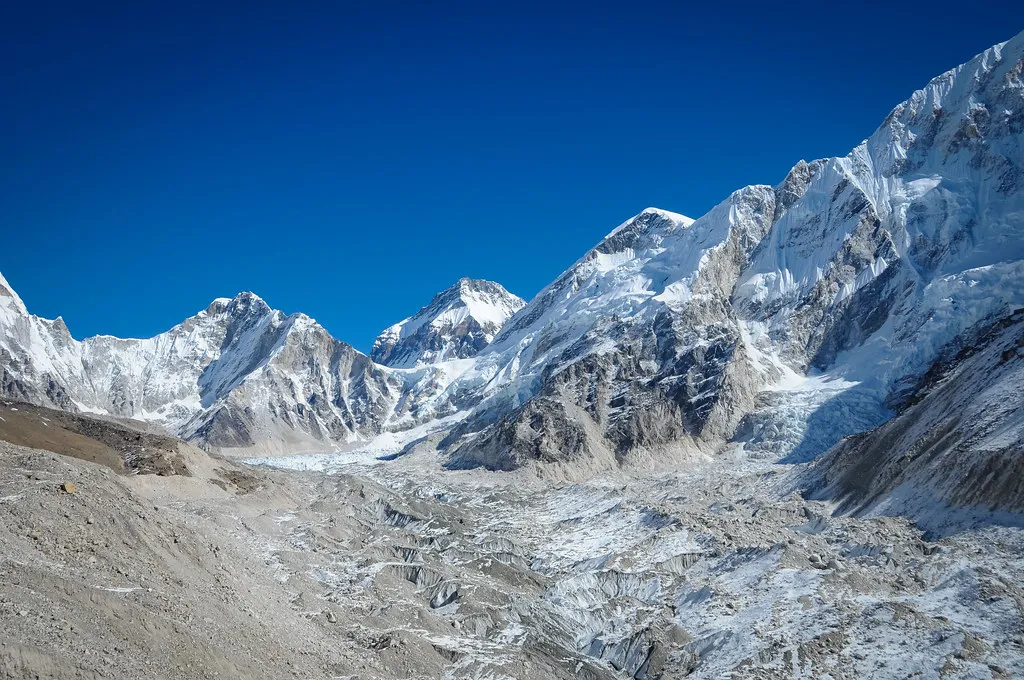
Image Credit: flickr.com
The trek to Everest Base Camp is known for stunning views of the tallest mountains in the world, and for the amazing Sherpa culture and a world-class hike. For nature enthusiasts and natural world fans, there’s another dimension too often overlooked — the rare chance to see high-altitude flora and fauna off-piste in one of the international’s most excellent ecosystems.
Sagarmatha National Park, wherein Everest is positioned, is likewise a UNESCO World Heritage site, not best for trekkers, but for a wide variety of Himalayan fauna and birdlife as well. Preserve your eyes open, learn to flow quietly, and realize when and where to apply your lens, and your odds of spotting uncommon and exciting creatures within the wild will improve. In this guide, you’ll locate tips for sighting flora and fauna on the trail to Everest Base Camp, what creatures to keep an eye out for, and how to appreciate the extreme and fragile balance of life in the Himalayas.
Sagarmatha National Park’s Role
Sagarmatha National Park is a ways than a mere scenic backdrop for your trek, and greater of a greater living, breathing environment of over 1,100 square kilometers at some stage in the Khumbu. From thick pine forests to alpine meadows and frozen glaciers, the park is home to a wide range of resilient wildlife. It was created in 1976 to ensure the conservation of the region’s natural and cultural history and was proclaimed a UNESCO global Biosphere Reserve in 1979. Its altitude varies from 2800 metres to over 8800 meters, resulting in various habitats harboring species which aren’t found anywhere else on this planet.
With its protected status, many animal right here are flourishing without the threats of poaching or encroaching development. And yet, most species are elusive, shy, and expertly camouflaged.“Being able to see wildlife here is just so rewarding and so memorable.”
Best Time to Hike -Wildlife On The Trail
Even though the Everest Base Camp trek is possible almost all year, the best time to see animals is throughout spring (March to May) and autumn (September to November). It’s the ones months whilst the weather is slight, the skies are clear, and the flora and fauna are in full swing. Animals are a lot more apparent in spring as they get out and about, having not moved around much over winter, especially birds. The fall months after the monsoon are ideal for visibility and slightly reduced trail traffic, which can up your odds of spying creatures who tend to be more shy.
Some species migrate to the lowlands during the winter months, and the cold means wildlife has no reason to be active. There are no crowds in the Summer Monsoon (June — September), but the trail is overgrown, and you are less likely to see wildlife as vegetation is dense, there is fog, and there are wet and muddy trails.
Animals that you can see in the Everest region
One of the maximum coveted creatures to spy inside the Everest vicinity is the elusive snow leopard, an image of the Himalayan desert. Whilst rare and in large part nocturnal, snow leopards roam the higher elevations across the trek. More often than not, trekkers will be able to come across the Himalayan tahr, a type of large goat like animal that spends a lot of the time grazing on steep rocky cliff faces. These hooved animals blend remarkably well into the terrain, yet can often be found on ridges and the faces of cliffs.
The musk deer, any other exciting animal, actions through the forests of the decrease region. It’s where given big, fang-like enamel that frequently surprises first-time viewers, however isr it’s a harmless herbivore. Pikas, small rabbit-like creatures, can also be observed darting through rocks, particularly around Dingboche and above. If you foot-slog with a silent party and listen up, you might hear them squeaking before seeing them.
What will you see while trekking in Sherpa country? Here, there, the beyaks—yakss born of yaks, yaks bred of yaks. These animals are not only pack animals; they also have the perfect adaptations to cold, thin air, and high terrain. Even more so is the wildlife you’ll witness them trekking through snowy trails.
Birds of the Himalayas
Bird watchers won’t be disappointed on the EBC trek. The Himalayan skies are rich in chicken lifestyles, and most of them may be visible without problems in case you take One of the most stunning birds you’ll see is the Himalayan monal, Nepal’s countrywide fowl. With iridescent feathers that shift hues depending on the mild, it’s frequently spotted foraging in the woods close to Tengboche or Namche.
You could additionally spot blood pheasants, snow pigeons, and the dapper purple-billed choughs, which often congregate near tea homes in the hope of finding stray crumbs. Every other star is the Himalayan griffon vulture, a massive chicken with a wingspan that may exceed 9 ft. It’s viable to look at those scavengers rise aloft above ridgelines, effortlessly the usage of the growing warm air.
Tips for Encountering Animals During a Hike
Most vital for efficiently watching wildlife is staying power and quiet. Animals are much more likely to come out at dawn or nightfall and in quieter regions of the path. Travel quietly, don’t have loud conversations, or make unexpected movements to be able to flush animals. Binoculars are a sensible preference in your daypack, especially in case you are birding or scanning long, far-off slopes for signs and symptoms of movement.
Be especially attentive whilst taking walks through forested areas between Lukla and Namche or hiking quieter aspect trails close to Dingboche and Phortse. Such areas are normally teeming with birdlife and small mammals. Trail the signs — rustling leaves, tracks, droppings may mean neighbors are nearby. Tea house owners and local guides are both great resources; they know the habits of local wildlife and can tell you about recent sightings.
Wildlife Hotspots Along the Route
A few sections of the EBC trail have better wildlife recognition possibilities compared to others due to the plant life, remoteness, and the range of the habitat. The forests around Monjoara are also a very good place to spot musk deer and a selection of birds, especially in early mornings. While ascending to Namche, appearance for the appearance of the Dudh Koshi for the attractive riverbank and wooded ridges in which you would in all likelihood spot some Himalayan tahr grazing.
Nearby Tengboche Monastery is a fascinating wooded area of rhododendrons, which, in turn, is a haven for pheasants and the Himalayan monal. Further, marmots and pikas were spotted at the rocky outcrops between Dingboche and Lobuche, specifically in spring and early autumn.
No matter the fact that we see fairly few snow leopards in the area around Pheriche and Gorak Shep, this is a part of their natural range. Neighborhood rangers and conservationists have established such sightings through the use of virtual camera traps, so even in case you don’t see one, simply understanding you’re walking through their territory gives a sense of awe to the adventure.
Responsible Wildlife Watching
Appreciating the flowers and fauna, manner respecting them, too. In no way get close to animals, even though they seem friendly. Do not feed wild animals as it destroys their natural behavior in the wild and will result in wild animals turning into dependent or aggressive. If you snap photographs, don’t use a flash and, if feasible, do not interrupt their routines.
Live on marked trails too, now not to harm sensitive alpine plants or stress flora and fauna far from their feeding and nesting locations. By adhering to the “go away, noo trace” teachings, future generations of trekkers may be privileged to enjoy the same magical episodes in nature.
Final Thoughts
From there, you are taking a series of winding trails through towering mountain peaks to reach the base camp. The Everest Base Camp trek isn’t much of a vacation spot — it’s approximately being wild within the heart of the Himalayas. At the way, you are probably fortunate sufficient toseer a snow leopard’s paw print in the snow or a Himalayan monal dancing through the forest, or witness a herd of tahr silhouetted against a sparkling mountain sky.
You mayn’t be confident of seeing the herbal global on the course; however, that’s part of what makes the experience so specific. With a few staying power, an eager eye, and the proper recognition for the land, some time hiking the EBC may feel like moments of natural spectacle you’ll in no way forget long after you’ve descended from the mountains.